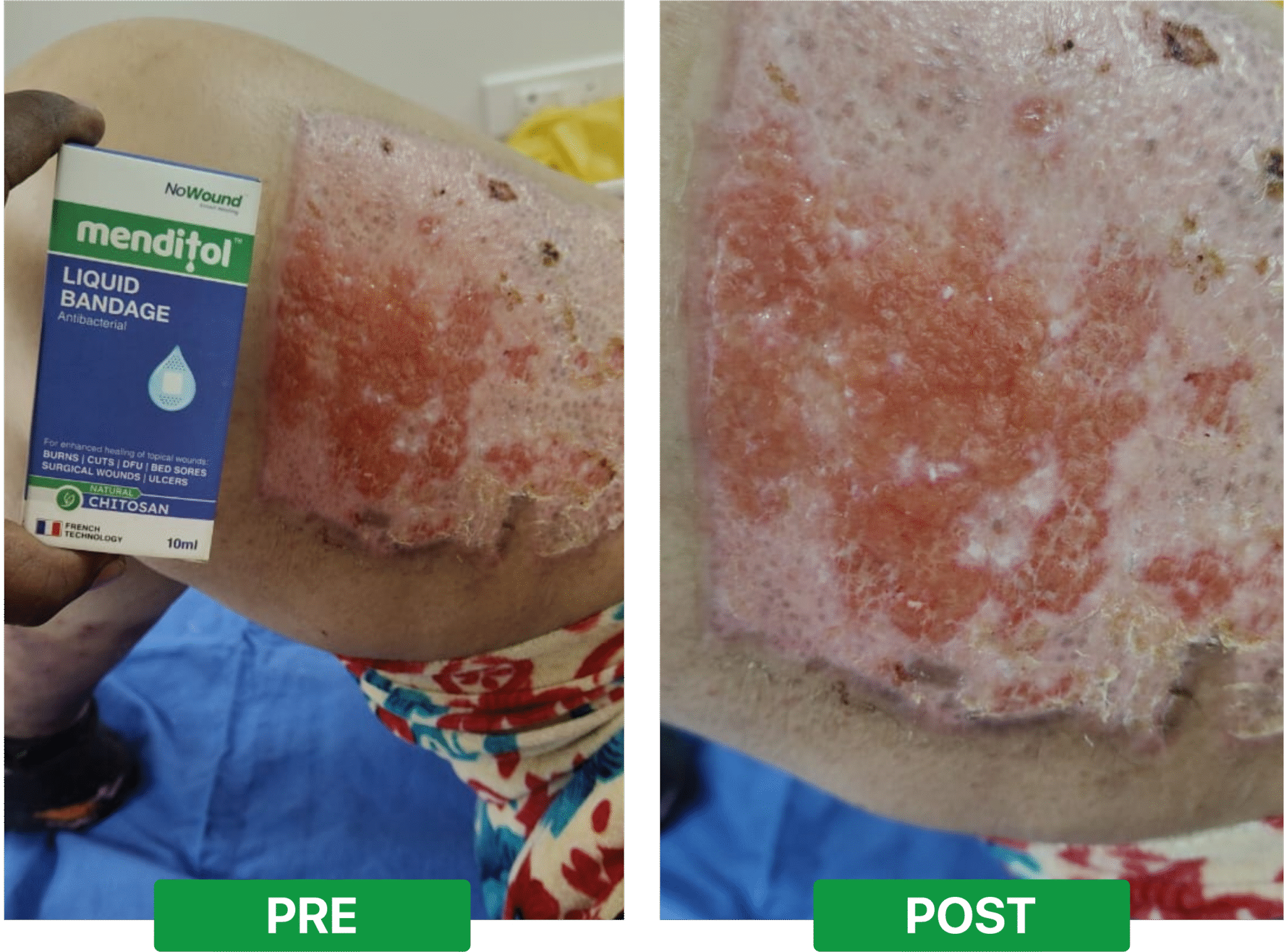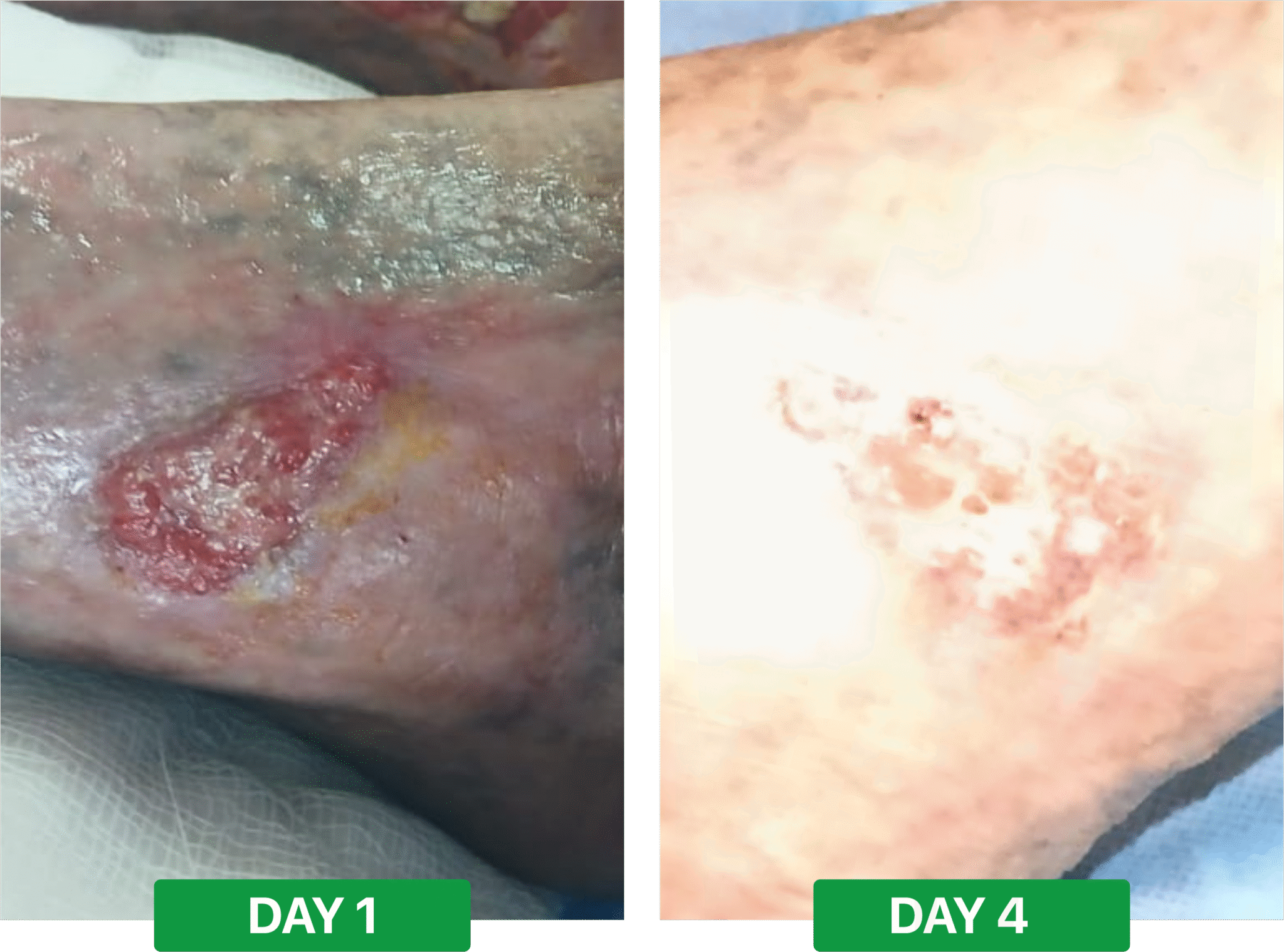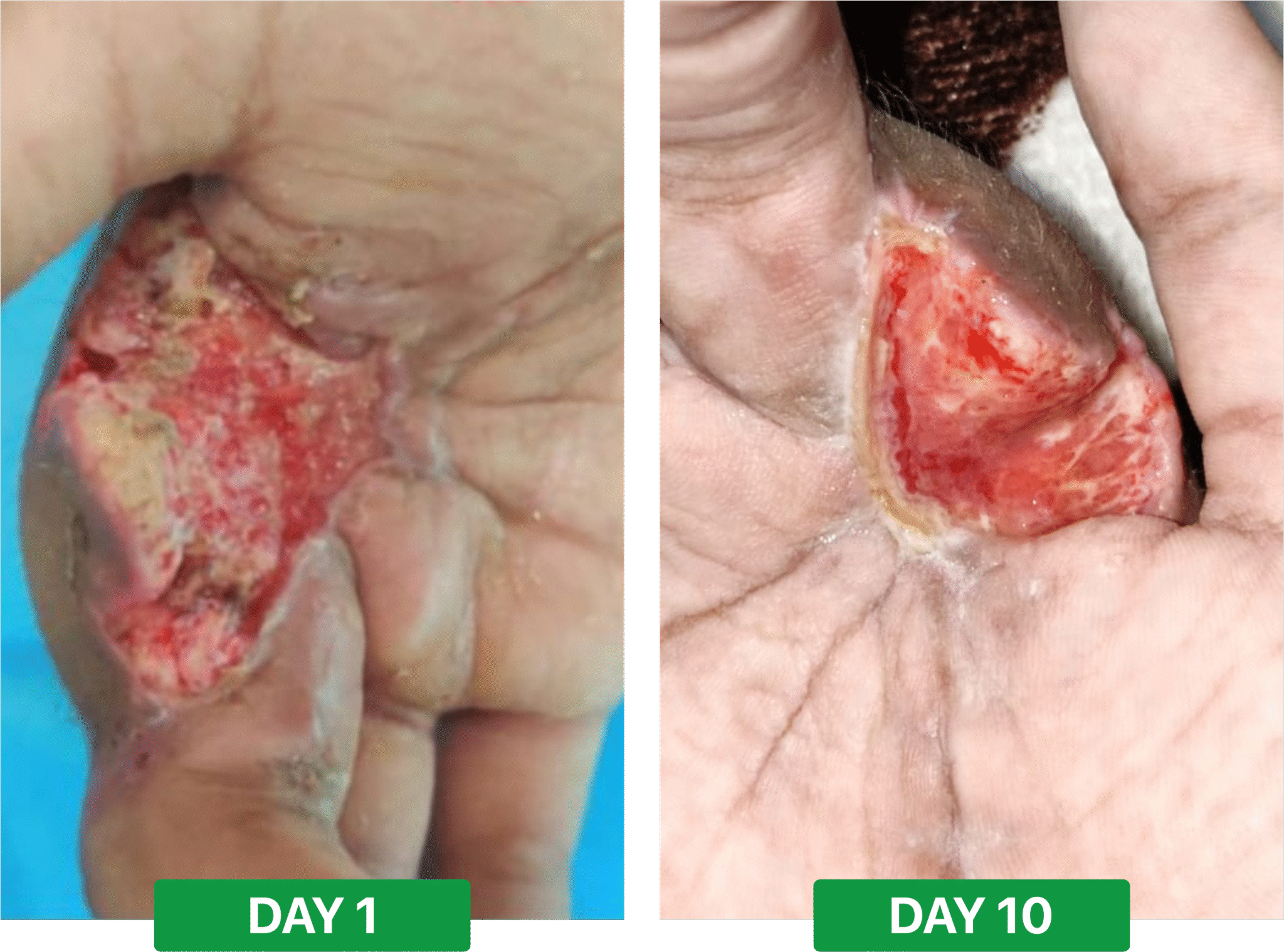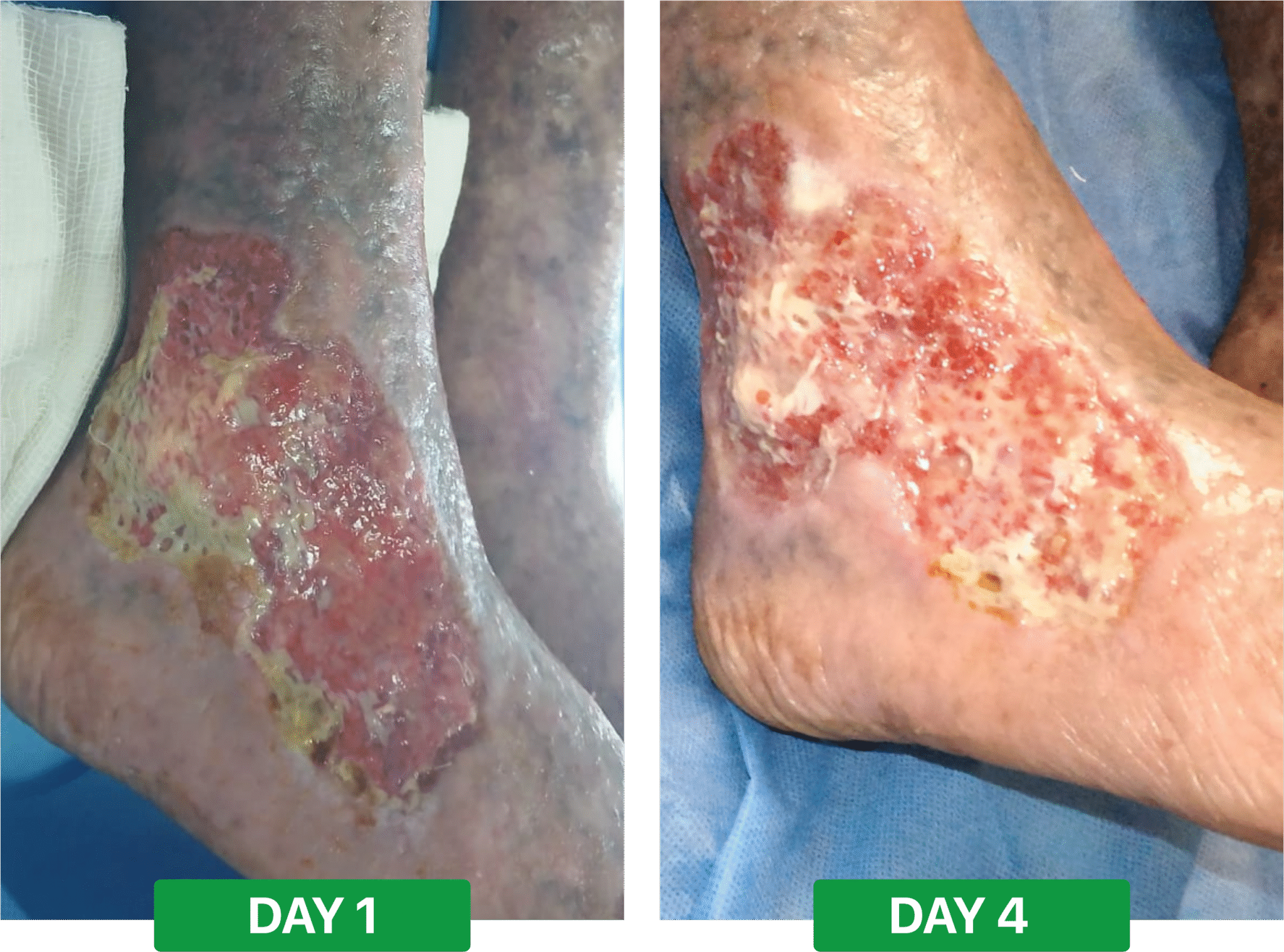


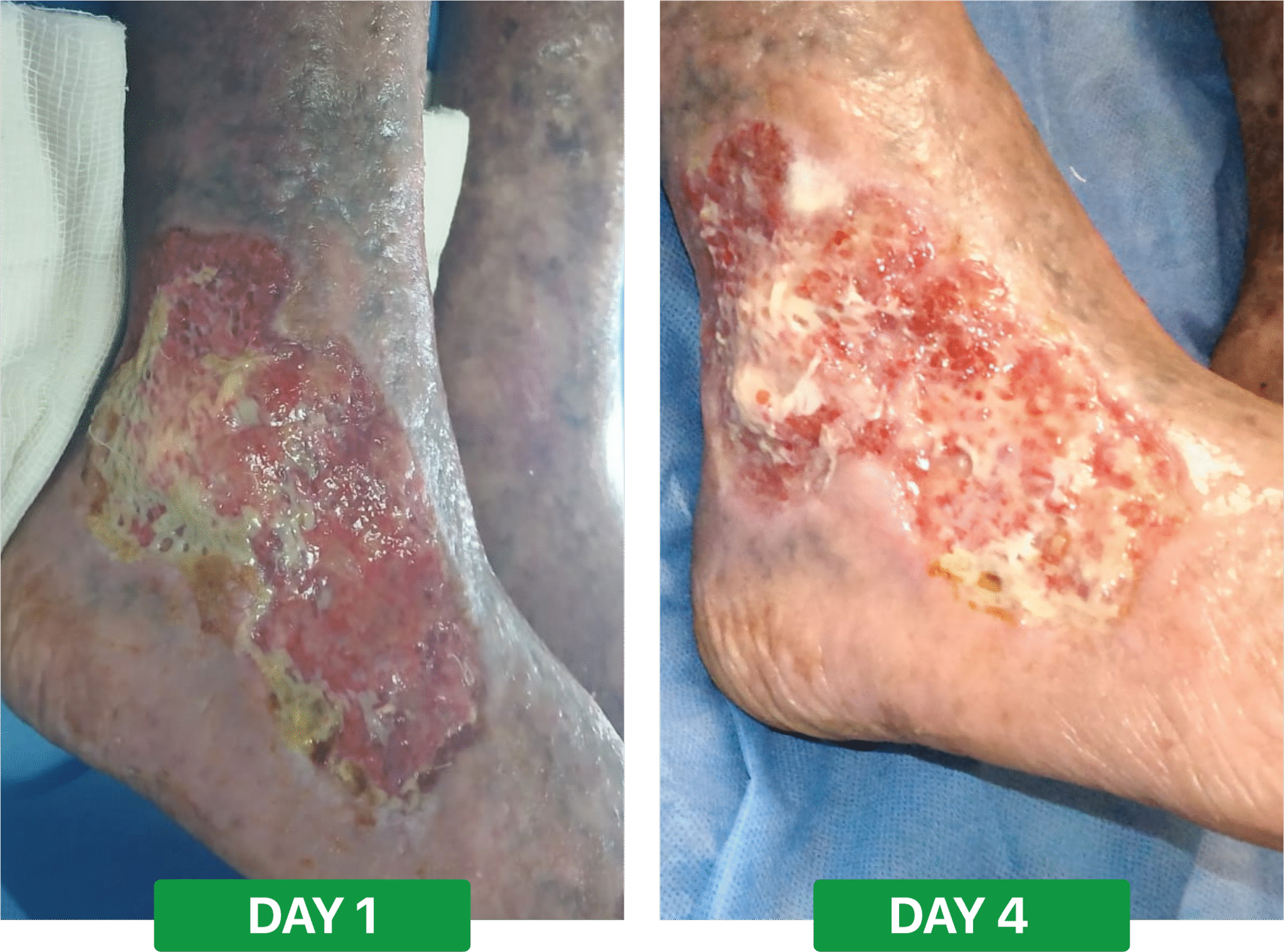
Clinically Proven
Advanced Liquid Bandage for Faster, Safer Wound Healing
Powered by high-purity chitosan to protect wounds, reduce infection, and accelerate tissue repair.


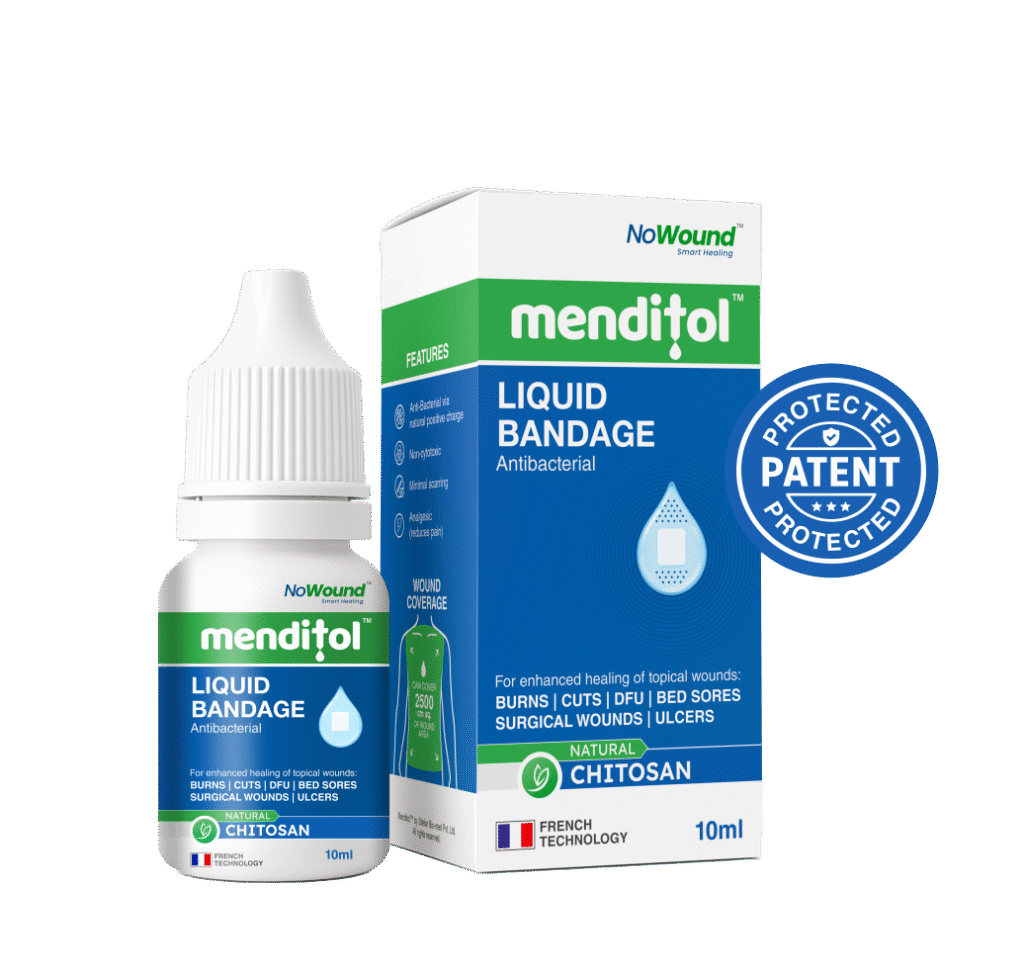
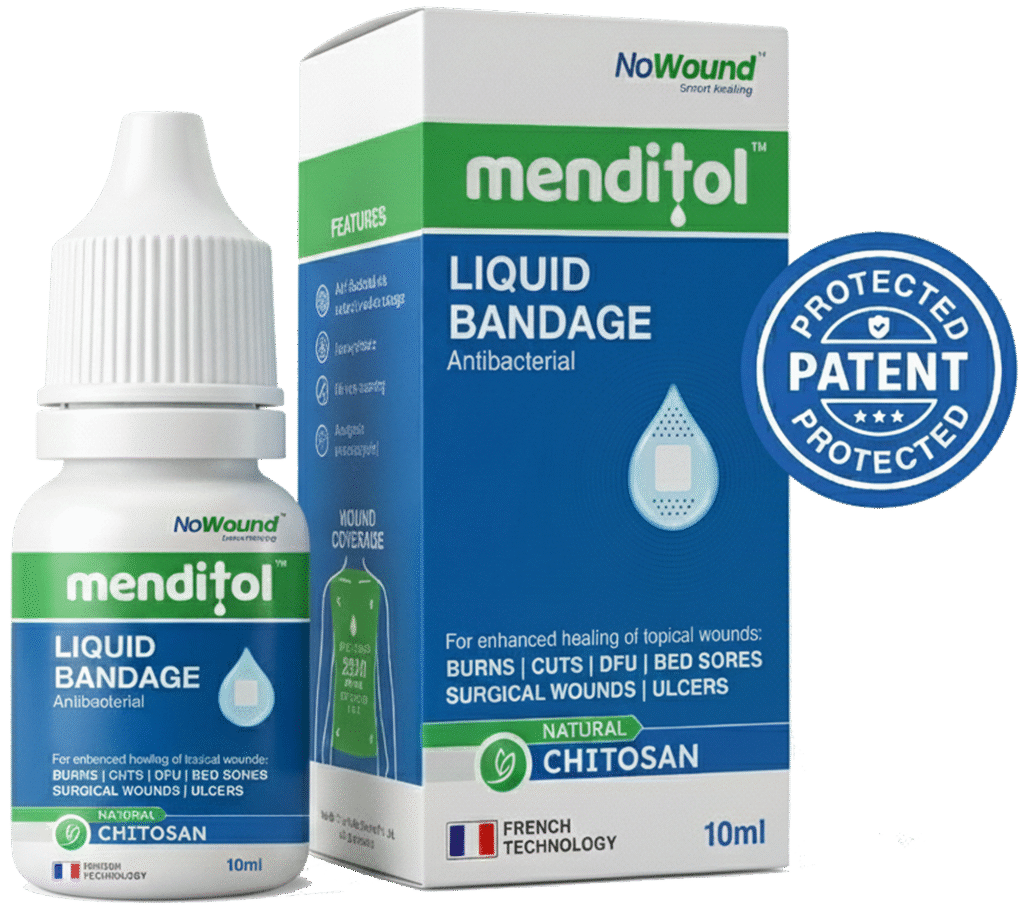
A next-generation
liquid bandage
Formulated with high-purity Chitosan Lactate to accelerate healing, reduce infection, relieve pain and provide rapid hemostasis. Ideal for burns, diabetic foot ulcers, surgical wounds and everyday cuts.
Non-Cytotoxic and Biocompatible
Safe healing without any damage to healthy granulation tissue
Broad Antimicrobial Action
The positive charge of chitosan disrupts the negatively charged cell walls of bacteria and fungi.
Accelerated Healing
Promotes the rapid migration and proliferation of essential skin cells (fibroblasts and keratinocytes)
Enhanced Tissue Regeneration
Stimulates the synthesis and organized deposition of collagen and other extracellular matrix components.
Hemostatic Action
Cationic chitosan interacts with negatively charged RBCs & platelets.
Autolytic Debridement
Maintains an optimal moist environment for wound healing.
Anti-Inflammatory
Helps regulate the inflammatory response by modulating cytokine production.
Analgesic Action
Helps cover exposed sensitive nerves and interferes with the nerve impulse due to its positive charge.


Advanced Chitosan-Based Interactive Wound Dressing

Liquid forms enter the deeper parts of the wound.

Non-adherent and non-traumatic removal.

Superior scar cosmesis.

Biocompatible and hypoallergenic, suitable for sensitive skin.

Conforms to uneven wound beds and hard-to-reach areas

Non-cytotoxic, safer than traditional wound care products

First and second degree burns
Surgical or post-op wounds
Donor sites and skin grafts
Venous ulcers
Diabetic foot ulcers
Pressure ulcers
Cuts and skin abrasions
Request a
Call back
today
• Known allergy to chitosan- containing
products.
• Avoid use on deep puncture wounds or exuding wounds till exudate has stopped.
• Debride wounds with slough or biofilm before application.
• For external use only; not for internal application
1

Clean the wound thoroughly with sterile saline or water and gently pat dry

3

Apply an appropriate secondary dressing, if needed, once the menditol layer is completely dry
2

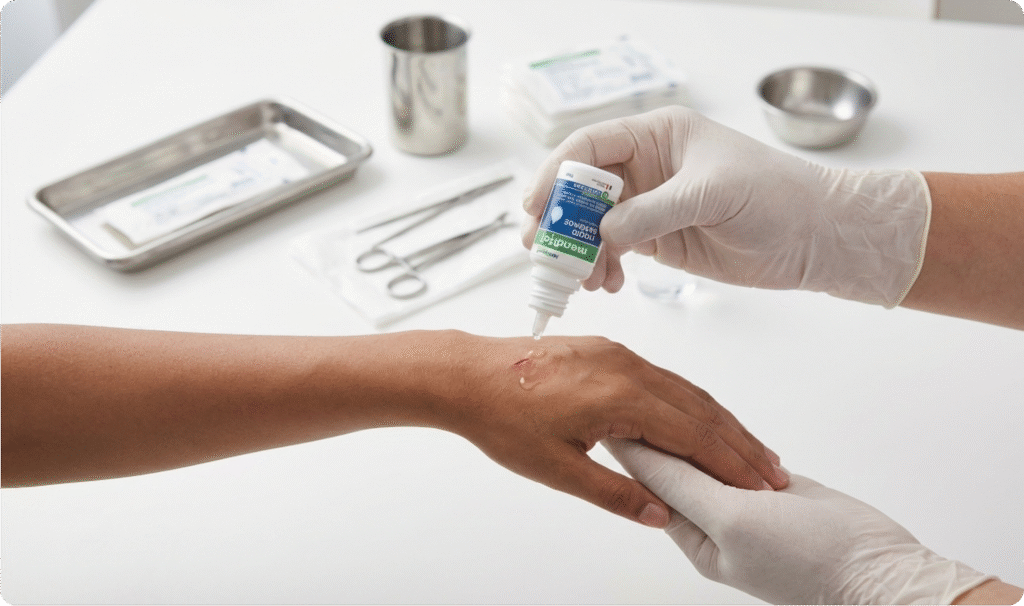
Apply to the wound, spread evenly into a thin layer, and allow it to air-dry for 3–5 minutes.

4

Dressing Change: Clean the area with sterile saline to dissolve the existing film, gently pat dry, and reapply.

5

Frequency: At least once every 24 hours, or as clinically indicated.
Frequently Ask Questions (FAQs)
What is Menditol® liquid bandage?
How does Menditol® liquid bandage work on wounds?
What types of wounds can Menditol® be used for?
Is Menditol® safe for diabetic patients?
Does Menditol® contain antibiotics or steroids?
How often should Menditol® be applied?
References
| S.NO | Country | Indication | Scientific Literature | Year of publication | Form of Chitosan-based product | Type of study | Study model |
|---|---|---|---|---|---|---|---|
| 01 | US | Burns | Chitosan topical get formulation in the management of burn wounds | 2009 | Gel/Hydrogel | Research Publication | Animal |
| 02 | US | Burns | Chitosan topical get formulation in the management of burn wounds | 2009 | Gel/Hydrogel | Research Publication | Animal |
| 03 | US | Burns | Chitosan topical get formulation in the management of burn wounds | 2009 | Gel/Hydrogel | Research Publication | Animal |
| 04 | US | Burns | Chitosan topical get formulation in the management of burn wounds | 2009 | Gel/Hydrogel | Research Publication | Animal |
| 05 | US | Burns | Chitosan topical get formulation in the management of burn wounds | 2009 | Gel/Hydrogel | Research Publication | Animal |
| 06 | US | Burns | Chitosan topical get formulation in the management of burn wounds | 2009 | Gel/Hydrogel | Research Publication | Animal |
| 07 | US | Burns | Chitosan topical get formulation in the management of burn wounds | 2009 | Gel/Hydrogel | Research Publication | Animal |
| 08 | US | Burns | Chitosan topical get formulation in the management of burn wounds | 2009 | Gel/Hydrogel | Research Publication | Animal |


A next-generation liquid bandage formulated with
high-purity Chitosan Lactate to accelerate healing, reduce infection,
relieve pain and provide rapid hemostasis. Ideal for burns, diabetic foot
ulcers, surgical wounds and everyday cuts.
Key Features

Non-Cytotoxic
and Biocompatible
Safe healing without any damage to healthy granulation tissue

Broad Antimicrobial Action
The positive charge of chitosan disrupts the negatively charged cell walls of bacteria and fungi

Accelerated
Healing
Promotes the rapid migration and proliferation of essential skin cells (fibroblasts and keratinocytes)

Enhanced Tissue
Regeneration
Stimulates the synthesis and organized deposition of collagen and other extracellular matrix (ECM) components

Hemostatic
Action
Cationic chitosan interacts with negatively charged RBCs & platelets

Autolytic
Debridement
Maintains an optimal moist environment for wound healing

Anti-
Inflammatory
Helps regulate the inflammatory response by modulating cytokine production

Analgesic
Action
Helps cover exposed sensitive nerves and interferes with the nerve impulse due to its positive charge

Key Features

Liquid forms enter
the deeper parts
of the wound

Non-adherent
and non-traumatict
of the wound

Superior scar
cosmesis

Indications
• First and second degree burns
• Diabetic foot ulcers
• Donor sites and skin grafts
• Pressure ulcers
• Donor sites and skin grafts
• Surgical or post-op wounds
• Cuts and skin abrasions
Request a call back today
Precautions
- Known allergy to chitosan-containing products
- Avoid use on deep puncture wounds or exuding wounds till exudate has stopped
- For external use only; not for internal application
- Debride wounds with slough or biofilm before application
Application Protocol

1

Clean the wound thoroughly with sterile saline or water and gently pat dry

2

Apply the required drops directly to the wound. Spread evenly using a gloved finger or sterile spatula to form a thin layer. Allow it to air dry for 3-5 minutes

3

Apply an appropriate secondary dressing, if needed, once the menditol layer is completely drye

4

Dressing Change: Clean the area with sterile saline to dissolve the existing film, gently pat dry, and reapply

5

Frequency: At least once every 24 hours, or as clinically indicated

Application Protocol
1

Clean the wound thoroughly with sterile saline or water and gently pat dry
3

Apply an appropriate secondary dressing, if needed, once the menditol layer is completely drye

2

Apply the required drops directly to the wound. Spread evenly using a gloved finger or sterile spatula to form a thin layer. Allow it to air dry for 3-5 minutes
4

Dressing Change: Clean the area with sterile saline to dissolve the existing film, gently pat dry, and reapply
5

Frequency: At least once every 24 hours, or as clinically indicated
References
| S.NO | Country | Indication | Scientific Literature | Year of publication | Form of Chitosan-based product | Type of study | Study model |
|---|---|---|---|---|---|---|---|
| 01 | US | Burns | Chitosan topical get formulation in the management of burn wounds | 2009 | Gel/Hydrogel | Research Publication | Animal |
| 02 | US | Burns | Chitosan topical get formulation in the management of burn wounds | 2009 | Gel/Hydrogel | Research Publication | Animal |
| 03 | US | Burns | Chitosan topical get formulation in the management of burn wounds | 2009 | Gel/Hydrogel | Research Publication | Animal |
| 04 | US | Burns | Chitosan topical get formulation in the management of burn wounds | 2009 | Gel/Hydrogel | Research Publication | Animal |
| 05 | US | Burns | Chitosan topical get formulation in the management of burn wounds | 2009 | Gel/Hydrogel | Research Publication | Animal |
| 06 | US | Burns | Chitosan topical get formulation in the management of burn wounds | 2009 | Gel/Hydrogel | Research Publication | Animal |
| 07 | US | Burns | Chitosan topical get formulation in the management of burn wounds | 2009 | Gel/Hydrogel | Research Publication | Animal |
| 08 | US | Burns | Chitosan topical get formulation in the management of burn wounds | 2009 | Gel/Hydrogel | Research Publication | Animal |