
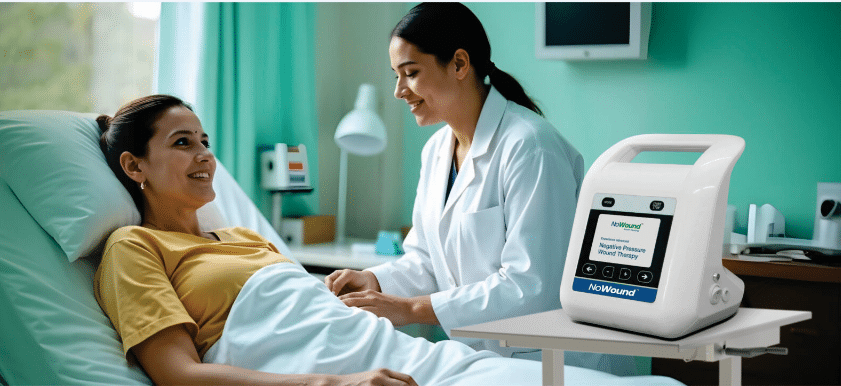
Trauma and surgical wounds require meticulous management to ensure optimal healing, reduce infection risks, and prevent complications such as delayed closure or excessive scarring. Negative Pressure Wound Therapy (NPWT) has emerged as a highly effective treatment that accelerates wound healing, minimizes fluid accumulation, and enhances tissue regeneration.
Feature | NPWT | Traditional Wound Care |
Healing Speed | Faster due to continuous wound stimulation | Slower healing process |
Infection Control | Superior due to vacuum-sealed environment | Higher risk of contamination |
Dressing Frequency | Less frequent, improving patient comfort | Requires frequent dressing changes |
Pain Management | More effective as it stabilizes the wound | Higher discomfort due to frequent handling |
Cost-Effectiveness | Higher initial cost but reduces overall healthcare expenses | Lower initial cost but longer healing duration |
NPWT is used for open fractures, dehisced surgical wounds, large traumatic wounds, pressure ulcers, diabetic foot ulcers, and skin grafts to improve healing.
NPWT removes excess fluid, enhances oxygenation, and promotes tissue regeneration, leading to faster wound closure.
Yes, NPWT reduces the risk of infections by creating a closed, bacteria-free healing environment.
NPWT is often used alongside debridement, skin grafting, antibiotic therapy, and other wound management techniques to optimize healing.
NPWT can be customized with different foam shapes and dressing techniques to accommodate deep or complex wounds.
Potential risks include minor bleeding, discomfort, or allergic reactions. Proper wound assessment and management minimize complications.
Healing duration depends on wound severity, patient health, and treatment adherence. NPWT significantly reduces healing time compared to traditional methods.
Yes, portable NPWT systems allow mobility but avoid putting pressure on the wound and keep the tubing secured to prevent accidental disconnection.
If you notice increased redness, swelling, warmth, pain, foul-smelling drainage, or fever, contact your healthcare provider immediately, as these may be signs of infection.
Costs depend on wound size, therapy duration, and healthcare provider. While NPWT has a higher initial cost, it is cost-effective due to reduced hospital stays and complications.
Negative Pressure Wound Therapy offers a dynamic approach to wound care, actively promoting healing and reducing the risk of complications after trauma or surgery. Consult your healthcare provider to determine if NPWT can enhance your recovery process.