A skin graft is a surgical procedure where healthy skin is transplanted from one body area to another to cover wounds, burns, or areas with significant tissue loss. For successful grafting, optimal conditions such as adequate blood supply, minimal infection risk, and controlled moisture levels are essential. Negative Pressure Wound Therapy (NPWT) is widely used in post-skin graft care to enhance graft survival and improve healing outcomes.
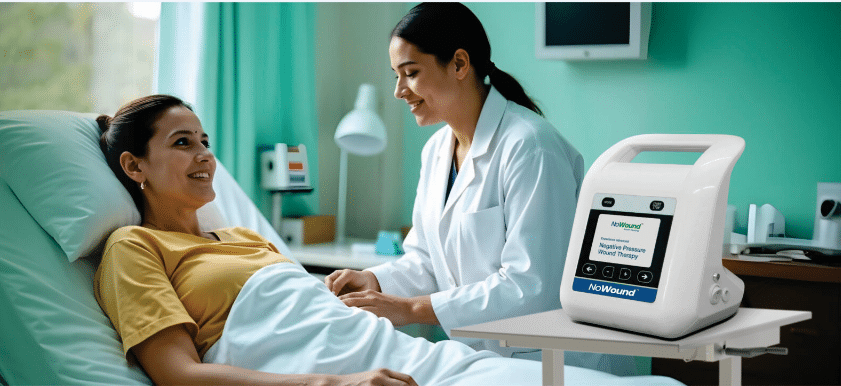
Negative Pressure Wound Therapy (NPWT), or vacuum-assisted closure (VAC) therapy, is an advanced wound care technique that speeds up wound healing using a vacuum system.
NPWT is suitable for various patient groups, particularly those with:
However, contraindications include untreated infections, necrotic tissue with eschar, and malignancies in the wound area.
While skin grafting is generally safe and effective, potential complications include:
NPWT creates an optimal environment by:
Effective Group | Risk Factors | NPWT Benefit |
Split-thickness skin grafts (STSG) | Fragile graft, high fluid buildup | Enhances adherence and prevents fluid accumulation |
Full-thickness skin grafts (FTSG) | Reduced blood supply | Promotes graft perfusion and viability |
Burn victims requiring grafting | Large wound surface, infection risk | Reduces bacterial load and accelerates healing |
Chronic wound patients | Diabetes, venous ulcers | Supports graft success and prevents rejection |
Traumatic wound repair | Deep tissue loss, delayed healing | Facilitates faster wound closure and integration |
Feature | NPWT | Traditional Graft Care |
Graft Adherence | Stronger, prevents displacement | Can be affected by movement |
Fluid Management | Actively removes excess fluid | Requires frequent dressing changes |
Infection Risk | Lower due to controlled environment | Higher with open dressings |
Healing Speed | Faster due to enhanced blood flow | Slower without suction support |
Dressing Frequency | Less frequent, improving patient comfort | Requires more frequent changes |
NPWT enhances graft survival by improving adherence, reducing fluid buildup, and promoting oxygen-rich blood flow, which speeds up healing.
NPWT is recommended for large grafts, grafts in high-movement areas, burns, chronic wounds, and patients at high risk of infection.
Most patients experience mild discomfort initially, but NPWT helps stabilize the graft, reducing overall pain and the need for frequent dressing changes.
Healing time depends on graft size, wound condition, and patient health, but NPWT can significantly speed up the process, often within 7–14 days.
NPWT devices are available for home use but require medical supervision to ensure proper wound healing and device management.
Possible risks include minor bleeding, discomfort, or device-related complications. However, proper monitoring minimizes these risks.
NPWT can help minimize scarring and improve aesthetic outcomes by improving wound healing and reducing fluid accumulation.
Costs vary based on therapy duration, wound size, and healthcare provider, but NPWT is cost-effective in reducing hospital stays and complications.
If the dressing is lifting or losing its seal, gently press it down. If the issue persists, contact your doctor, as an airtight seal is essential for proper healing.
NPWT can significantly enhance graft survival, reduce complications, and improve overall healing if you undergo a skin graft procedure. Consult your doctor to determine if NPWT is the best choice for your post-graft care.